
Primal Diet and Mediterranean Diet: Two Paths to Health, One Shared Biology

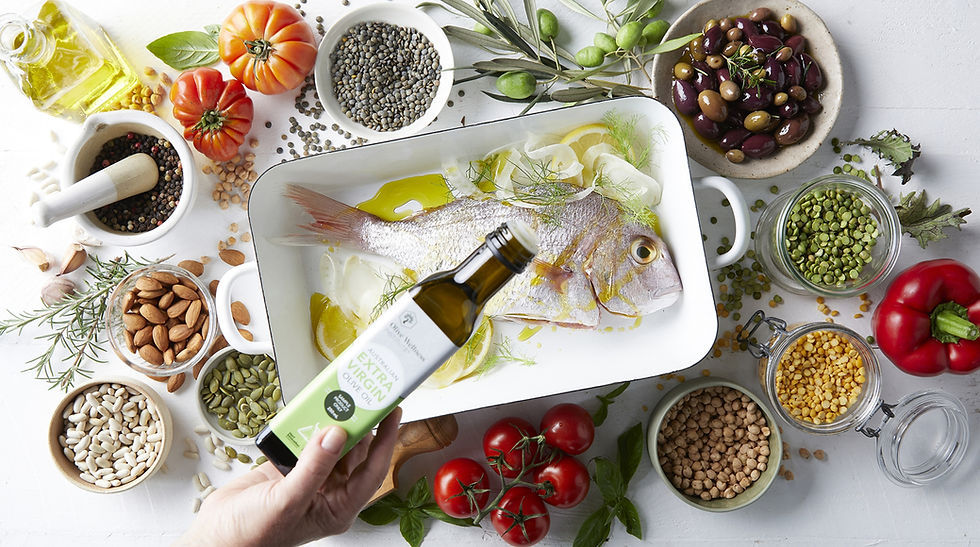
Discussions about healthy eating often circle back to two approaches: the Primal Diet and the Mediterranean Diet. Both reject ultra-processed foods, both value tradition, and both are associated with better long-term health. Yet they arise from different ways of thinking. The primal diet looks backward to evolution, asking what the human body is biologically adapted to eat. The Mediterranean diet looks outward to living cultures, asking what people who age well and avoid chronic disease actually eat. When viewed together—and through the lens of the often-ignored “dark matter of nutrition”—the differences between them become clearer, and so does the reason both can work.
The primal diet is rooted in evolutionary biology. Its basic assumption is that human physiology was shaped over hundreds of thousands of years, while agriculture and industrial food systems arrived very recently. From this perspective, many modern health problems reflect a mismatch between ancient biology and modern diets (Eaton & Konner, 1985). This idea was foreshadowed in the early work of Weston A. Price, who documented traditional societies eating minimally processed foods and observed striking physical health before the introduction of modern refined products (Price, 1939). Later, these ideas were formalised and popularised in modern nutrition through ancestral and paleo frameworks (Cordain, 2002), and further adapted into a flexible lifestyle model that included sleep, movement, and stress management (Sisson, 2012).
The Mediterranean diet, by contrast, was not built on evolutionary theory but on observation. Long-term studies of Southern European populations revealed lower rates of heart disease and metabolic illness among people consuming diets rich in vegetables, olive oil, legumes, fish, and fermented dairy (Keys et al., 1986). Rather than excluding foods based on evolutionary timing, the Mediterranean pattern focuses on what has worked in real communities over generations. It is less prescriptive and more cultural, embedded in shared meals, seasonal produce, and traditional cooking methods.
One of the clearest differences between the two diets is how they treat grains and legumes. The primal diet generally avoids these foods, arguing that they became dietary staples only after the advent of agriculture and may cause digestive issues for some individuals due to lectins and phytates (Cordain, 2002). The Mediterranean diet includes grains and legumes as everyday foods, but typically prepares them through soaking, fermentation, or slow cooking—methods that improve digestibility and tolerance (Keys et al., 1986). This contrast highlights a key theme: the primal diet prioritises biological caution, while the Mediterranean diet prioritises traditional preparation.
Dairy provides an example of how the two approaches often converge. In primal eating, dairy is optional and usually limited to fermented forms such as yogurt, kefir, and aged cheese. Mediterranean eating also favours yogurt and cheese, often from sheep or goat milk, consumed in moderate amounts. Importantly, fermented dairy is better tolerated not because lactose disappears completely, but because live bacteria produce the enzyme lactase, which continues to assist lactose digestion in the gut after consumption (Savaiano et al., 1984; Marco et al., 2017). Here, different reasoning leads to the same practical outcome.
Beyond macronutrients lies a shared but often overlooked layer: the dark matter of nutrition. This includes dietary fibre, resistant starch, and polyphenols—components of food that humans do not digest directly. Instead, they feed the gut microbiome (Sonnenburg & Sonnenburg, 2019). When microbes ferment these compounds, they produce short-chain fatty acids that strengthen the gut barrier, reduce inflammation, support immune balance, and help prevent harmful substances from entering the bloodstream (Zinöcker & Lindseth, 2018). In this way, the dark matter of food acts as a quiet protective system rather than a source of calories.
The Mediterranean diet naturally delivers large amounts of this protective material through vegetables, legumes, fruits, herbs, olive oil, garlic, and modest amounts of red wine. These foods are rich in polyphenols and fibres that support microbial balance. The primal diet can also support this layer when it includes vegetables, roots, tubers, berries, herbs, and fermented foods. Problems arise only when primal eating is reduced to meat and fat alone, neglecting plant diversity (Sisson, 2012).
Certain Mediterranean ingredients illustrate how food can actively block harm. Extra virgin olive oil contains polyphenols, such as oleocanthal, that help calm low-grade inflammation and reduce oxidative stress, helping protect blood vessels (Mozaffarian, 2016). Red wine, when consumed in small amounts with meals, provides polyphenols that help slow cellular damage and support beneficial gut bacteria; the benefits come from plant compounds rather than alcohol itself (Marco et al., 2017). Garlic contains sulfur compounds, such as allicin, that act as gentle antimicrobials, helping suppress harmful bacteria while supporting immune balance (Zinöcker & Lindseth, 2018). These foods do not act like medicines; they quietly reduce damage before it accumulates.
Fermentation represents common ground between the two diets. Fermented foods improve digestibility, reduce the presence of natural toxins, introduce beneficial microbes, and enhance the biological usefulness of plant compounds (Marco et al., 2017). Whether approached from an evolutionary or cultural perspective, fermentation strengthens the same underlying systems.
In the end, the primal diet and the Mediterranean diet are not opposites. They are two lenses focused on the same goal: long-term health. The primal diet reminds us of biological limits shaped by evolution, while the Mediterranean diet shows how traditional food cultures can thrive within those limits. The concept of nutritional dark matter helps explain why both approaches work when they emphasise whole foods, plant diversity, fermentation, and minimal processing. Healthy eating is not only about what fuels the body, but also about what protects it from harm over time.
References
Eaton, S. B., & Konner, M. (1985). Palaeolithic nutrition. New England Journal of Medicine, 312(5), 283–289.Price, W. A. (1939). Nutrition and Physical Degeneration. Paul B. Hoeber.Cordain, L. (2002). The Paleo Diet. Wiley.Sisson, M. (2012). The Primal Blueprint. Primal Blueprint Publishing.Keys, A., et al. (1986). Seven Countries: A Multivariate Analysis of Death and Coronary Heart Disease. Harvard University Press.Savaiano, D. A., et al. (1984). Lactose digestion from yogurt. American Journal of Clinical Nutrition, 40(6), 1219–1223.Marco, M. L., et al. (2017). Health benefits of fermented foods. Current Opinion in Biotechnology, 44, 94–102.Sonnenburg, J. L., & Sonnenburg, E. D. (2019). The Good Gut. Penguin.Mozaffarian, D. (2016). Dietary priorities for metabolic health. Circulation, 133(2), 187–225.Zinöcker, M. K., & Lindseth, I. A. (2018). Western diet–microbiome interaction. Nutrients, 10(3), 365.


Comments